Spanish I
La Casa
Students, in this module you will learn all about the house and home. You will learn how to tell about your own home, describe the homes of others, and ask new friends about where they live. Whether it's a house or an apartment in the city or by the beach, you'll learn all you need to know in order to talk about it en español!
What students will know:
You can download a copy of your key terms for this module from the sidebar on the right. There's a resource in the sidebar that will help with pronounciation.
Vocabulary Practice: Students, make sure to practice and review your new vocabulary daily. Take a few minutes to test your knowledge with the following activity. You may repeat as many times as necessary. Also, be sure to check out the resources in the blue sidebar to the right for more practice with your new skills.
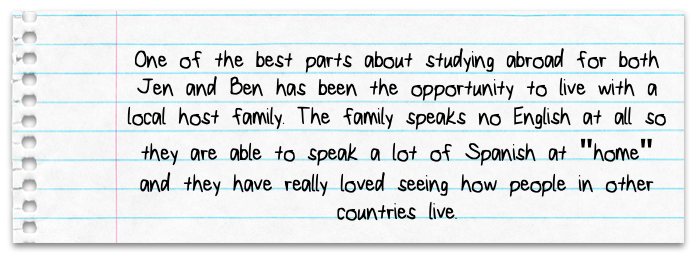
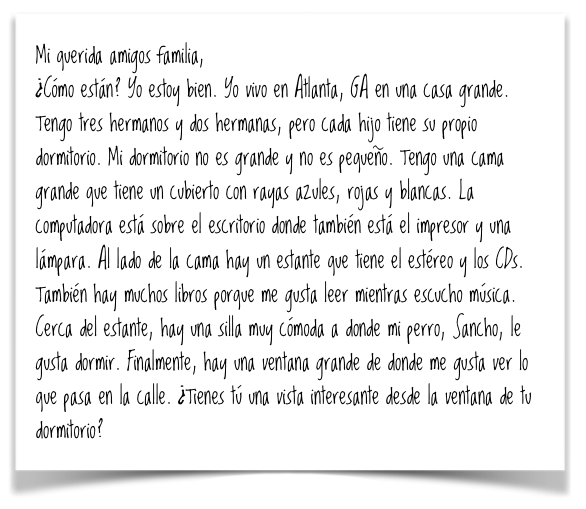
 A few months before Jen left for Spain her host family asked her to write them a letter describing what her room looks like at home. The idea was to try to make her room look similar so she will immediately feel at home. Her brother, Ben, is helping out, since he has to write a similar letter to his host family in México. He's pretty good at Spanish but wants to make sure he has included everything in his own letter so he asks you some questions about the kinds of things Jen likes or has. Answer the questions below in English or Spanish to test your understanding.
Check your answers
Escuchar (Listening)
 Listen to the audio below about "Los Quehaceres de Folly". Then open the handout entitled "Escuchar - La Casa" in the "Additional Resources" sidebar to the right. Answer the questions directly onto the handout and submit your assignment when completed. You may have to listen more than once!
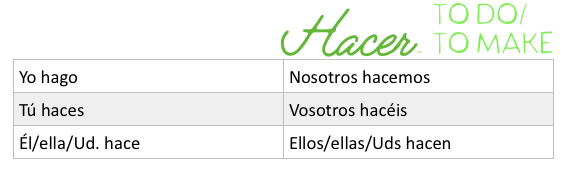
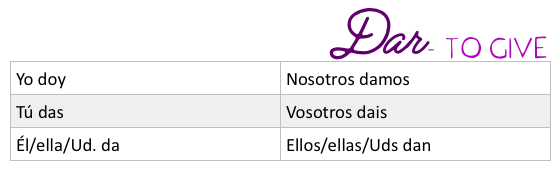
The verbs "Hacer" and "Dar" both have irregular conjugations in the YO FORM! Be sure to take note and study the verb forms below:
Time to practice these 2 unique verbs! Fill in the blanks with the correct verb form to test your understanding.

Ben has just gotten off the phone with Jen. It was so great to talk about their experiences. Mostly they talked about their temporary homes. Click on the speaker icons to listen as they compare their homes in Spain and México.
|
Ben: |
¡Hola Jen! |
|---|---|
|
Jen: |
¡Hola Ben! ¿Cómo estás? |
|
Ben: |
¡Excellente! ¿Cómo es Salamanca? |
|
Jen: |
Vivo en un apartamento. Es grande con tres dormitories, una sala, una cocina grande, dos baños, y un balcón pequeño. Hay muchas ventanas y está en la ciudad. ¿Cómo es Oaxaca? |
|
Ben: |
¡Me encanta Oaxaca! Vivo en una casa pequeña en la ciudad y está junto a muchas otras casas pequeñas. |
|
Jen: |
Mi apartamento está muy cerca de mi escuela. Yo camino a mis clases. ¿Está tu casa cerca de la escuela o lejos? |
|
Ben: |
Está muy cerca de mis clases. Yo camino también pero está un poco lejos de la playa. Yo tomo el autobús a la playa. |
|
Jen: |
Mi amiga de clase vive en el apartamento arriba de mi apartamento. |
|
Ben: |
Me gusta comer y el Mercado está a la derecha de mi casa. |
|
Jen: |
¡Perfecto! Hablamos en dos días. |
|
Ben: |
¡Excellente! Adiós |
Test your understanding by filling in the blanks with the correct preposition based on the conversation you heard. Listen as many times as necessary in order to answer the questions.
Vocabulary and Grammar Project
 To incorporate the vocabulary and grammar you have learned in this chapter, you will be required to complete a project. In this project you will either create your own floor plan or you can use the floor plan that has been provided for you in the sidebar to the right. You are to label the rooms EN ESPAÑOL and write sentences EN ESPAÑOL telling what you do in each room. See the instructions below for more specifics reagarding number of vocabulary terms, sentences, etc to include in your project.
Requirements:
First, choose a presentation tool to work with. You can either challenge yourself by trying something new or stick with what you know.Be sure to check with your teacher first if you have any other ideas of tools to use. Please read the requirements below very carefully before you begin to make sure that you have all the required components (vocabulary, grammar, and images).
**If you plan to use the floor plan provided please review the instructions in the sidebar detailing how to type on this document.**
Showing possession - who owns something - is very different in Spanish and English. You can't use "'s" in Spanish! Ever! In order to show possession, use de ("of"). This means the literal translation of "Julia's book" is something more like "the book of Julia." Either way, the message is the same - the book belongs to Julia. If you use de before a noun rather than a proper name or subject pronoun, you must use the definite article (el, la, los, las) to say "of the." When de comes before el, they combine to form del. Make sure you know the following definitions:
of = de
of the = del, de la, de los, de las
Examples:
About this information
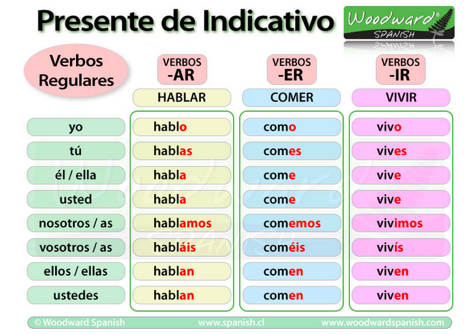
Now that you have completed the initial assessments for this module, review the lesson material with the practice activities and extra resources.
