Spanish I
La Comida
Students, in this module you will learn all about dining out abroad. You will learn how to read a menu, how to speak to a waiter, and how to pay the bill. You will also learn your way around the market and learn how to purchase food to take home. ¡Vámanos a comer!
Download a copy of the key terms for this module from the sidebar on the right.
Stem-Changing Verbs sound like what they are! These types of verbs change in the stem. Remember when you first learned how to conjugate verbs from the infinitive? You learned that a verb, in its infinitive form, has two parts [the stem and the ending].
Hablar - Stem: Habl Ending: ar
Stem-Changing Verbs work differently from regular verb conjugations. Instead of just dropping the ending and adding a new one, you must also change the verb in the stem. There are 3 types of stem-changing verbs. In this first task, we are going to learn about verbs that change from e to ie in the stem.
Some of those verbs are:
|
Stem-Changing Verb |
Translation |
|---|---|
|
Preferir |
To prefer |
|
Entender |
To understand |
|
Comenzar |
To begin |
|
Cerrar |
To close |
|
Querer |
To want |
Another form of stem-changing verbs are those that change from o to ue. Some of those verbs are:
|
Stem-Changing Verb |
Translation |
|---|---|
|
Almorzar |
To eat lunch |
|
Costar |
To cost |
|
Volver |
To return |
|
Encontrar |
To find |
|
Dormir |
To sleep |
Watch the presentation for more practice with these stem-changing verbs! When you are finished, try and conjugate the verbs at the end of the presentation.
The third type of stem-changing verb are those that change from e to i. Some of those verbs are:
|
Stem-Changing Verb |
Translation |
|---|---|
|
Pedir |
To ask for |
|
Servir |
To serve |
|
Reír |
To laugh |
|
Sonreír |
To smile |
|
Decir* |
To say/to tell |
* Note: decir has in irregular yo form - digo!
View the information below to learn more. When you are finished, try and conjugate the verbs at the end of the presentation.
Assignment: Conversar (Speaking)
 ¡Vamos al restaurante!
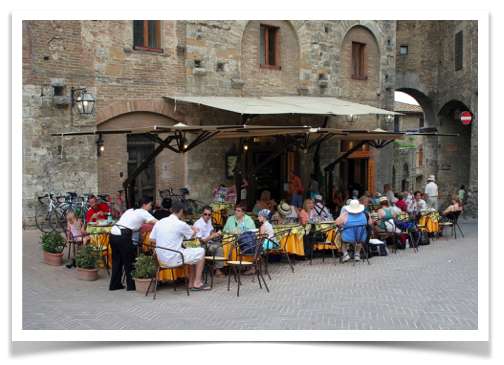
Unless you want to eat the same thing every day while you are in Spain during your class trip, you will need to be able to communicate with waiters in Spanish.
 You will need to be able to communicate what you want to eat with the waiter. Since you don't want to feel awkward you are going to practice before you go. Imagine that you and a friend are in a sidewalk café in Madrid. Prepare a practice dialogue in which you will order "el almuerzo".
Be sure to include the following required elements:
Your practice "routine" should contain a minimum of 6-8 sentences. You should have at least 10 vocabulary words from this module and at least 4 stem-changing verbs from this module. Submit your completed assignment when finished.
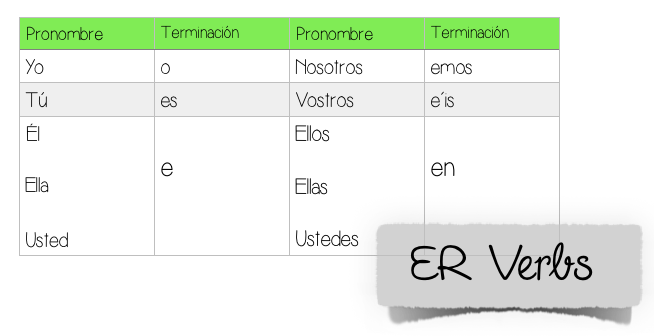
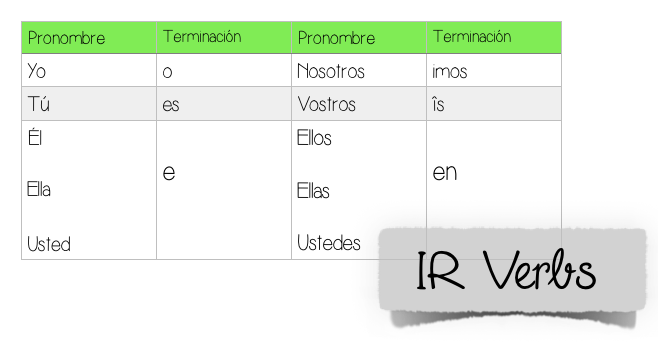
In the La familia module you learned endings for regular "-er/-ir" verbs. Below you will find a review and some practice with these conjugations.
Here are some examples:


 ¡Qué divertido! Jen gets to attend a live cooking demonstration from a famous Spanish chef, Marcella Morales. Marcella will be preparing a typical Spanish dish called "paella". Listen as she discusses the ingredients she will be using and then test your understanding by answering the questions that follow. Note: she will also be using lots of "er/ir" verbs in her presentation.
Todos los españoles comen paella. Es un plato típico de España. ¡Gracias por asistir hoy! Hoy vosotros aprendéis como cocinar el paella. Yo vivo cerca de la playa y por eso prefiero usar los mariscos. Mi Hermana vive en las montañas y ella prefiere usar más pollo en su paella. Los otros ingredientes son el arroz, el ajo, la cebolla, y los guisantes.
Focus on "go" verbs. These verbs are irregular in that the "yo" form does not just end in "o" but it ends in "go". The rest of the forms are regular according to "-ar/-er/-ir" endings. Here are a few common ones:
Tener - to have (this one is a "go" verb as well as (e-ie) stem-changer)
Venir - to come (this one is a "go" verb as well as (e-ie) stem-changer)
Decir - to say (also an (e-i) stem-changer)
Hacer - to do/to make
Poner - to put/to place
Salir - to leave

Review Activity:
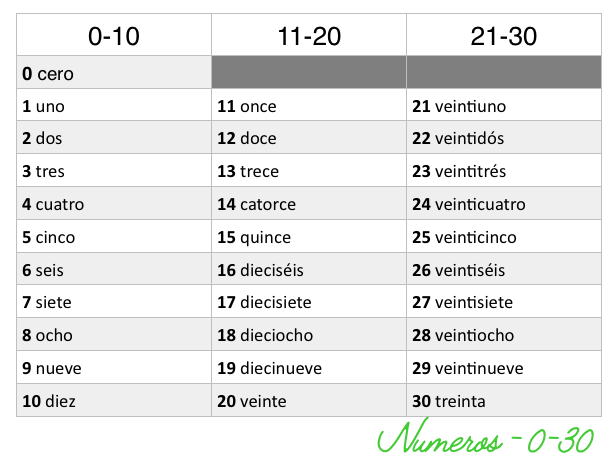
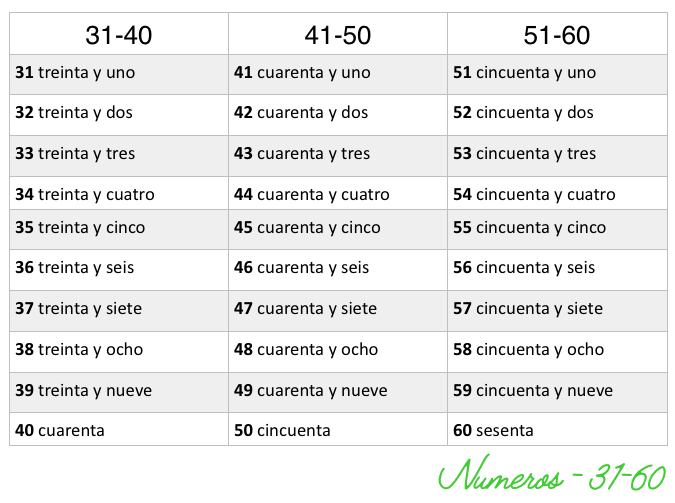
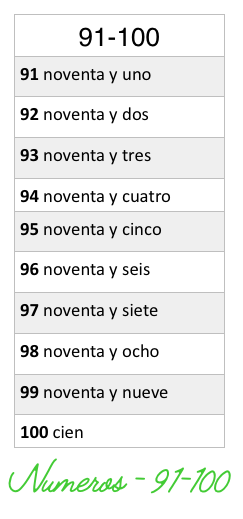
Read the menu below and answer the questions regarding prices en español using the numbers you just learned.
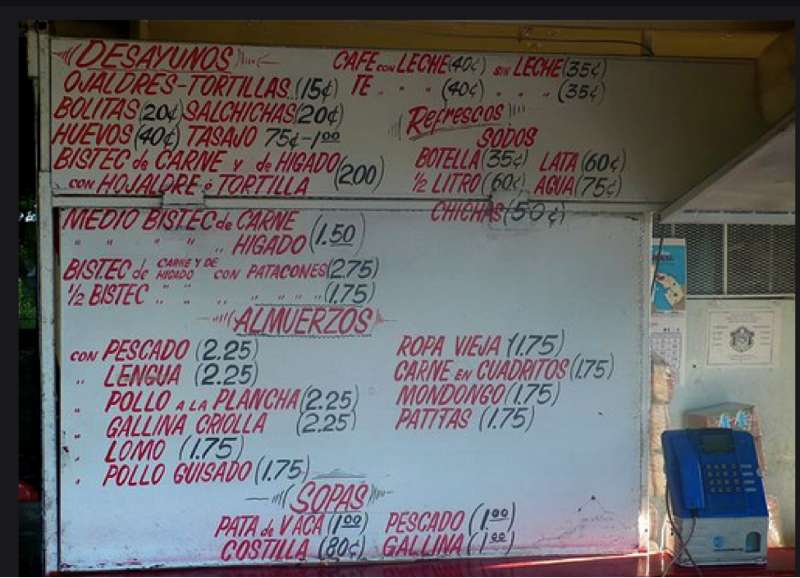
*Note: the prices are in Euros and centavos. (Ex: 1.75 = Un euro, setenta y cinco centavos.)
Vocabulary and Grammar Project
 To incorporate the vocabulary and grammar you have learned in this chapter, you will be required to complete a project.
Menú en español
Whether in un restaurante elegante con familia or en grupo having a sandwich in un café, Spaniards love the ambiance of their small cafés and restaurants. As a visitor to Spain, you would have to be able to understand a menu in Spanish. This not only includes a knowledge of food vocabulary, but a cultural understanding of whether you are paying for an entire meal at one fixed price or, more commonly, as separate items. You might also see el menú del día or cubierto which sets a fixed price for the specialty of the day.
Pretend you are going with your teacher to Spain next summer and you want to have practice in reading and understanding menus. You will create a menu in Spanish for your classmates to interpret. Be sure to do the following:
Requirements:
Be sure to check with your teacher first if you have any other ideas of tools to use. Please read the requirements below very carefully before you begin to make sure that you have all the required components (vocabulary, grammar, images).
Submit your completed assignment when finished.
In Spanish, we have two ways to say "to be". It is very important that you understand the uses of each. You should also know the correct conjugations. You've already learned the forms and practiced with many uses of "ser" and "estar" but now you will learn the differences between the 2 verbs and how to choose which one to use based on the content of the sentence.
Repaso (review)
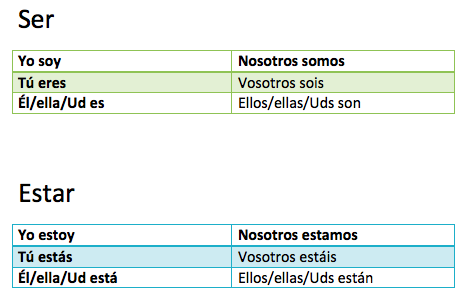
Uses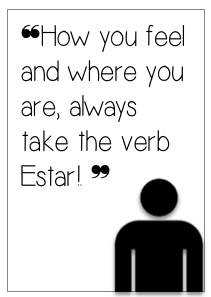
|
Ser |
Estar |
|---|---|
|
Identification [Es Marta] |
Location [Havana está en Cuba] |
|
Origin [Ella es de Madrid] |
Condition [Ella está cansada (tired)] |
|
Characteristics [Yo soy alta] |
|
|
Telling Time [Son las tres] |
|
|
Dates [Hoy es el tres de febrero] |
|
|
Time / Place of an Event [La fiesta es en mi casa] |
|
In English we have lots of contractions. For example:
And many more!
In Spanish there are only 2 contractions.
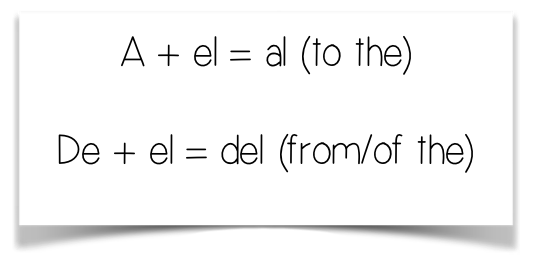
Here are some examples:
Now that you have completed the initial assessments for this module, review the lesson material with the practice activities and extra resources. Then, continue to the next page for your final assessment instructions.