Spanish I
Las Artes
You can download a copy of your key terms from the sidebar on the right. Then listen to the audio file to hear these terms pronounced.
Listen to the audio -

Isabella la artísta
Isabella es artísta. Ella pinta todos los días. A ella le gusta pinta los animales y le gusta usar colores muy brillantes. En los sábados, Isabella va al rastro para vender sus cuadros. Los pequeños cuestan 5 euros, los medianos cuestan 10 euros, y los grandes cuestan 15 euros. Su animal favorito para pintar es el caballo pero también le gusta pintar los pajaros. Ella es muy talentosa y quiere asistir a una Universidad para estudiar las artes y la historia del arte.
Answer the following questions based on what you read in the passage above. Then roll your mouse over SHOW ANSWER in order to check your responses.
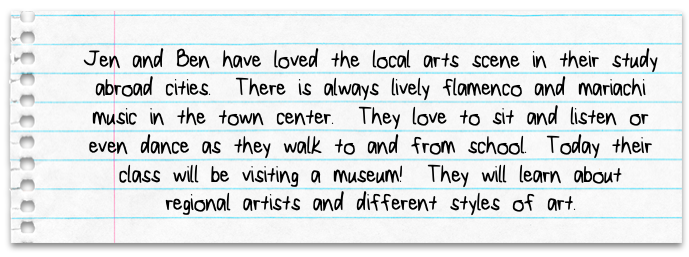
 Yesterday Jen went to visit El Museo del Prado. It is the national museum of Spain located in Madrid, the capital city of Spain. Madrid is about a 2 hour bus ride from where she is studying and living in Salamanca. Jen has to give a brief presentation to her class about the museum excursion en español.
First, visit the link in the sidebar and check it out for yourself!
As you know Jen likes to practice out loud a few times before a presentation. Listen to her presentation and her review of the museum and the art that she saw. Then answer the questions that follow in order to test your understanding.
Answer the following questions based on what you heard in the audio file above. Then roll your mouse over SHOW ANSWER in order to check your responses.
Escuhcar (Listening)
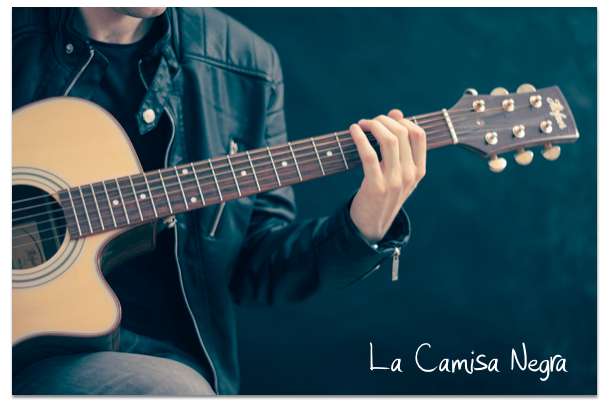
 Juanes is a very popular Colombian pop musician who is also famous world-wide. One of his most famous songs is "La Camisa Negra". Click the link in the sidebar to listen to the song. Then open the document entitled "Escuchar - La Camisa Negra" and fill in the terms missing from the handout based on what you hear. You will probably have to listen a few times to get it right! Then submit your completed assignment when finished.
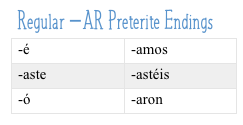
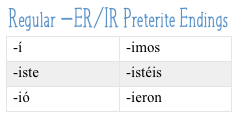
Some verbs don't follow the regular pattern of conjugations for the preterite tense. These verbs are irregulars. In this sections you will learn the conjugations of ser, dar, ir, y hacer. Note, the preterite forms of these verbs do NOT have accents!
View the presentation below to see specifically how these verbs are conjugated. Make sure and take notes as you will see these again on the module test.
More verbs that don't follow the regular conjugation pattern of the preterite tense. They also do not have accents!
View the presentation see specifically how these verbs are conjugated. Make sure you take notes as you will see these again on the module test.
Vocabulary and Grammar Project
 To incorporate the vocabulary and grammar you have learned in this chapter, you will be required to complete a project.
One of the best and most exciting ways to learn about a new culture is to experience it. There are countless sites around the world that offer a first-hand view through exhibits and guided tours. While it may not be possible to physically visit every site of historical significance, the internet provides ample opportunities to visit many of these locations virtually.
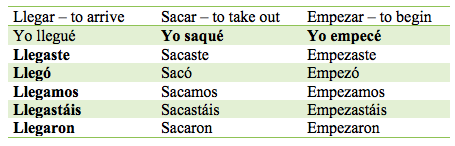
In the PRETERITE (past tense) only also in the "yo" form only:
Here are three examples:
All other forms of the verb would follow the pattern for regular -ar verbs in the preterite. Here are a few examples:
You try!
On a separate sheet of paper in the blanks with the correct PRETERITE form of the "-car, -gar, -zar" verb in order to test your knowledge. Then, rolll your mouse over the blank to check your answers.
Now that you have completed the initial assessments for this module, review the lesson material with the practice activities and extra resources. Then, continue to the next page for your final assessment instructions.