Spanish I
Al Aeropuerto y viaje
In this module you will not only learn the necessary skills to travel in a Spanish-speaking country, but you will also review all grammatical concepts and begin to put everything you've learned together in a meaningful way.
You can download a copy of your key terms from the sidebar on the right.

First watch the video below. This is a video by Spanish-speaking teenager and YouTube star, Sonia Alicia, giving advice about what to do on "stay-cation". Watch the video and then complete the corresponding activity below in order to test your understanding.*You may have to watch more than once!
Watch the video with Sonia and then put her suggestions in order based on the order she suggested in the video. Be careful! Not every suggestion is listed!
Practice your vocabulary terms:
Present tense is used for actions that are currently happening. Below are the endings for REGULAR -ar, -er, and -ir verbs. Remember, there are lots of irregulars as well that do not fit these patterns.
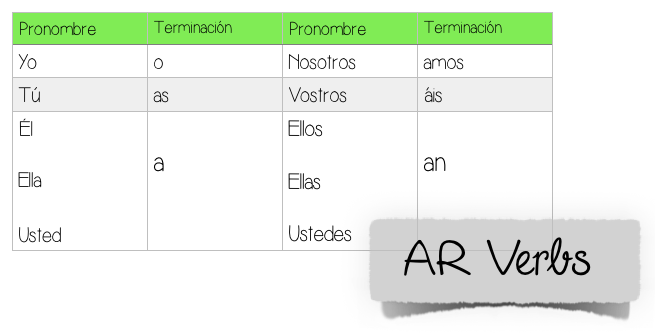
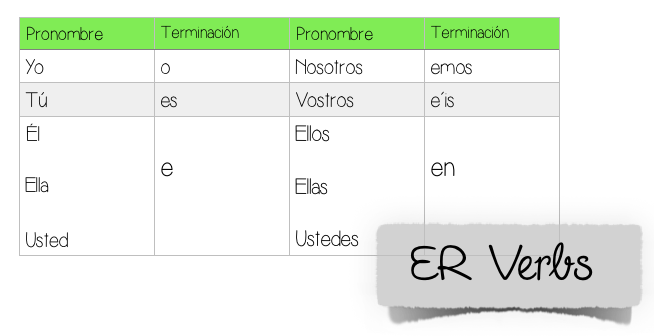
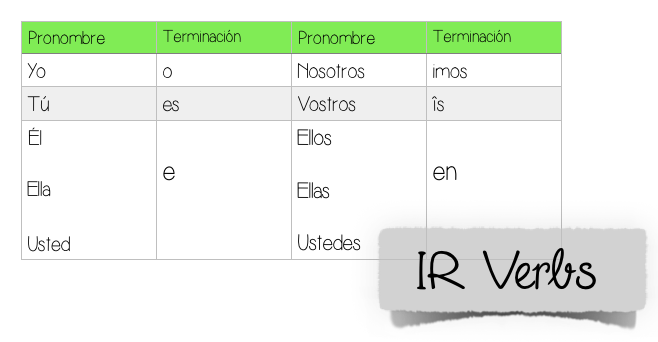
Fill in the blanks with the correct form of the regular -ar, -er, -ir verb in the present tense:
 "Gustar" (to like) is not conjugated like other "-ar" verbs. Instead it has 2 parts. The first part is an Indirect Object Pronoun (IOP) and the second part is "gusta" or "gustan". There are only 2 "conjugations" of "gustar".
Here are your IOP's
You choose your form of "gustar" based on the number of things being liked.
Here are a few examples:
Now you try:
There are a few other verbs that work in the same way as "gustar". These are often referred to as "gustar-like" verbs. This means that they have 2 parts; the IOP and then only a singular or plural conjugation of the verb itself. Below you will see a list of some of these verbs and some examples.
You can find more information regarding "gustar" and "gustar-like" verbs using the link in the sidebar to the right.
The present progressive tense combines the conjugated form of the verb "to be"(estar) and the present participle. The present participle is basically the "ing" form of verbs.
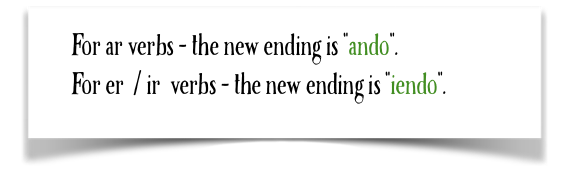
The present progressive can only be used for actions occurring now. View the information below for more explanation.
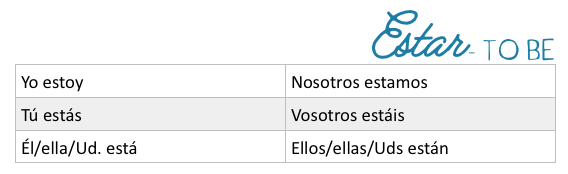
There are quite a few irregular verbs in Spanish. "Irregular" means that they do not necessarily follow the pattern for endings that regular -ar, -er, -ir verbs follow. The only way to remember which verbs are irregular and what the conjugations are is to memorize them. Below you will see a few commonly used irregular verbs:


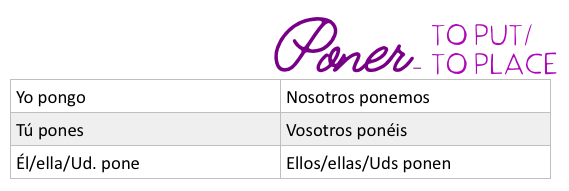
Some irregular verbs are called "stem-changers". You will see more of these in the next lesson. Other are called "yo-go" verbs meaning that the "yo" form ends in "-go" rather than just "-o". Below you will see a few examples:
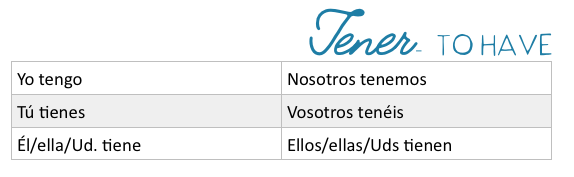
(Tener is also a stem-changer)
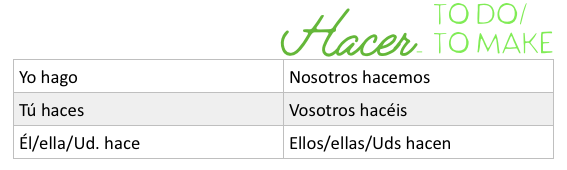
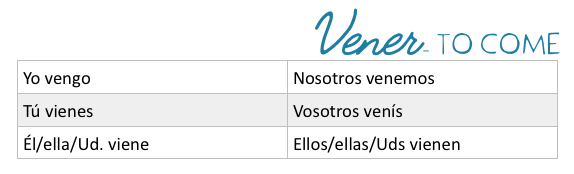
(Vener is also a stem-changer)
All verbs have a "stem" or "root". You locate the "stem" of the verb in Spanish by taking away the -ar, -er, or -ir ending. For example:
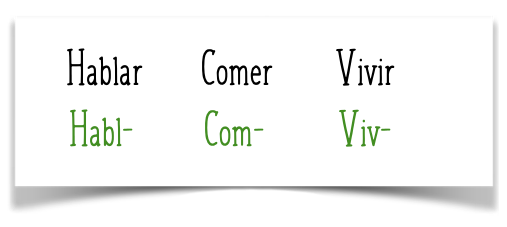
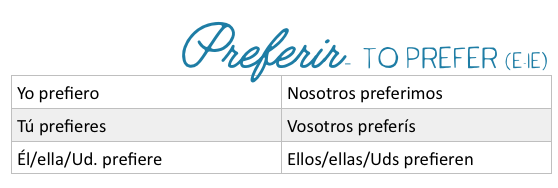
Some verbs have a change in the stem when conjugated and these are called "stem-changing" verbs. They are a type of irregular verb. There are 3 types of stem-changers in the present tense; "e-ie", "e-I", and "o/u-ue". Only 4 out of 6 conjugations have a stem-change; nosotros and vosotros do not change.
The only way to remember these is to memorize them. Below you will see some examples:
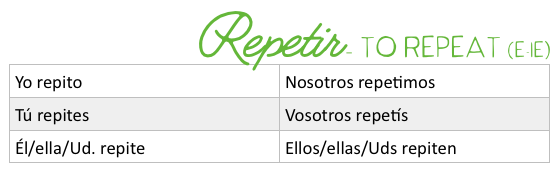
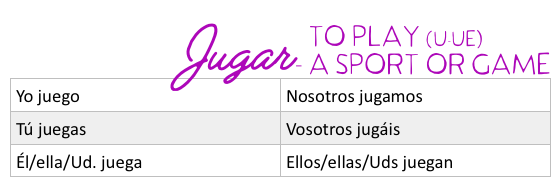
Just like in English, some verbs are compound verbs meaning that they consist of more than one part. Here are a few useful compound verbs that were learned this year.
You've already learned and reviewed the verb "ir" which means "to go". When you want to talk about an action that you or someone else wants to do in the future you use the 3 part phrase above.
Ejemplos:
You have already learned the verb TENER (to have). TENER is a very important verb. It is used to express something one "has to" do. It is also used in many expressions that do not translate easily to English. These are called IDIOMS.
You will know learn about those idioms and how to use TENER with QUE. When using Tener + que, you must conjugate it correctly and use the infinitive of the action verb:
Ejemplos:
View the following information to learn about the verb TENER when used with QUE and with Idiomatic expressions.
Conversar (Speaking)


 Pretend you live in either Salamanca, Spain or Oaxaca, México and your friend, Jen or Ben (respectively), is headed back to America after spending a week in your country. Write a letter giving her/him advice about what one must do in the terminal. Pick either air travel or travel by train. Be sure to mention things like having luggage and having a passport. Even by train in Europe, you need a passport as you cross country borders.
Click on the sidebar for the assessment rubric.
Some guidelines:
Submit your completed assignment when finished.
The preterite is used for actions in the past that are seen as completed. Use of the preterite tense implies that the past action had a definite beginning and definite end.
Ejemplo:
To conjugate verbs to preterite tense, you drop the -ar, -er, and -ir. Then, add the following endings:
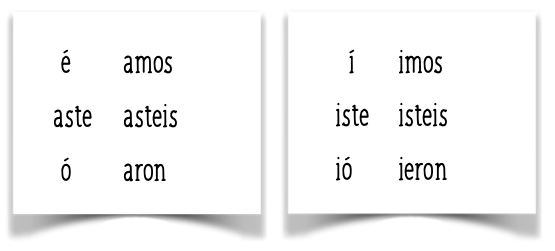
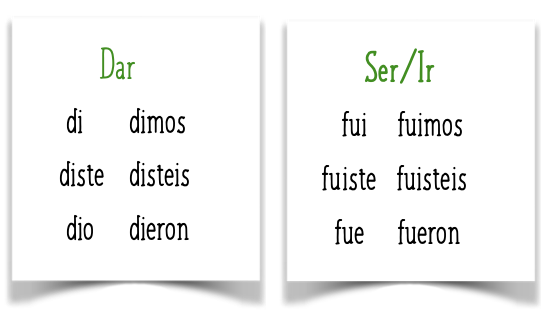

-ar and -er verbs that change their stem in the present tense do not change in the preterite. They are conjugated just like other regular preterite verbs.
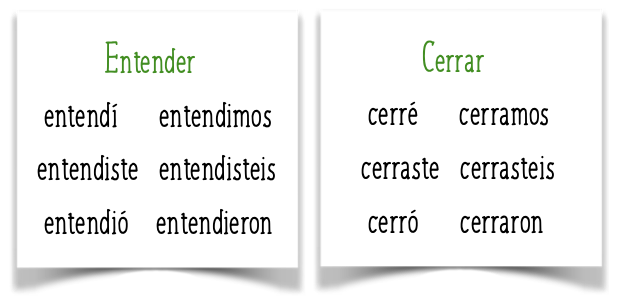
-ir verbs that change their stem in the present tense do change in the preterite, but in different way. They change e:i and o:u in the third person, singular and plural.

Vocabulary and Grammar Project
 To incorporate the vocabulary and grammar you have learned in this chapter, you will be required to complete a project.

Jen and Ben have had a great time during their study abroad experiences. They both put a lot of thought into choosing their host country and they are already planning where to go next! For this project you are going to plan your own future study abroad experience. It must be a Spanish-speaking country.
Here are some questions to answer:
Here are the requirements for this assignment:
Submit your completed assignment when finished.
Now that you have completed the initial assessments for this module, review the lesson material with the practice activities and extra resources. Then, continue to the next page for your final assessment instructions.